How to Reduce Sales Meeting No-Shows with Pre-Meeting Prep Materials
30% of prospects show up to sales meetings not knowing what they're about. Here's how pre-meeting prep materials cut no-shows and unqualified attendance.

TL;DR
Sales meeting no-shows and “ghost attendances” happen because the time between booking and meeting is empty. The prospect forgot why they booked the call. The fix is a pre-meeting prep packet: a short video, a one-paragraph agenda, and a clear note on what they should bring to the call. Teams that send prep materials consistently cut no-shows and stop wasting AE time on prospects who shouldn't have been on the calendar.
The no-show problem is two problems
Most sales teams describe a “no-show problem.” What they actually have is two problems stacked together.
The first is the classic no-show: the prospect doesn't join. Median no-show rates in B2B SaaS sit around 13.5%, with the top decile at or below 5.5%. That's the metric every sales leader tracks.
The second problem is invisible in the dashboard, and it's bigger. The prospect joins the call with no memory of why they booked it. One Demodesk customer described it directly:
“Circa 30 Prozent, mit denen wir sprechen, die wissen gar nicht, worum es geht in dem Termin.” — Account Executive, a German services company
About 30% of booked meetings turn into a re-pitch from scratch. The AE re-explains what the product is, why the prospect agreed to the call, what's supposed to happen in the next 25 minutes. Sometimes the prospect is honest about it:
“Ich habe auch keine Ahnung, was das ist, aber ich muss mir unbedingt diesen Termin anhören.” — Account Executive, a German services company
No one benchmarks this number. If your no-show rate is 13.5% and another 30% of attendees show up cold, your effective qualified-attendance rate is closer to 60%. That's the number that determines pipeline velocity.
What pre-meeting prep materials do
Prep materials solve four things at once.
Reminder. The prospect remembers they booked the call and why.
Self-qualification. Prospects who weren't a fit drop out before they consume AE time.
Context loading. The prospect arrives knowing what the product does. The AE skips the re-pitch and goes straight to discovery.
Stakeholder forwarding. The person who booked can forward the prep to the colleague who needs to be in the room.
That fourth point matters more than most teams realize. SDRs book the meeting with one person, and a different person shows up. If that second person received no context, the AE starts from zero. A forwardable prep email turns the booker into a multiplier.
One of our SDRs heard this from a prospect after sending a prep video:
“Das ist der allererste, seit einem halben Jahr, der sagt, bitte schickt mir was, dass ich zum Termin vorbereitet komme.” — SDR / Cold Caller, a German services company
Six months of demos, one prospect asking to be prepared. The demand exists. Most teams don't supply it.
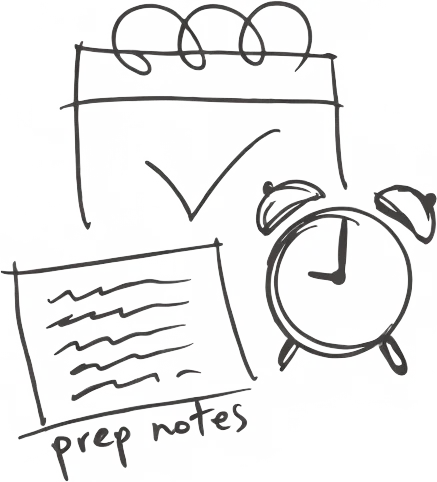
The prep packet: what to include
Keep it short. The goal is a 60-second read, not a content library.
A 60–90 second product video. Not a feature tour. A “what this is and who it's for” video that lets the prospect orient before the call. If they watch nothing else, this one matters.
A one-paragraph agenda. Three lines. What you'll discuss, how long it takes, what they should think about beforehand. Write it in plain language — not “Discovery → Demo → Q&A.”
A “what to bring” line. Examples: “Please have one recent recorded sales call you'd like us to analyze,” or “Bring a rough sense of how many reps you'd onboard in the first 90 days.” This is the self-qualification trigger. Prospects who can't answer tend to cancel before the call, which is what you want.
A forwarding note (optional). “If your CRM admin or RevOps lead will be involved in the decision, feel free to forward this.” Explicit permission to multi-thread.
No PDF deck. No 12-minute recorded demo. No resources hub. The packet should be skimmable in under a minute on a phone, between meetings.
When to send it
Send the prep packet 24 hours before the meeting, not at booking.
Sent at booking, it gets read once and forgotten — especially for meetings booked two weeks out. Sent 24 hours before, it lands when the prospect is scanning tomorrow's calendar. That's the moment the meeting becomes real.
For meetings booked less than 24 hours out, send immediately after booking, then a short reminder two hours before the call.
A confirmation email at booking is still useful for the calendar link. The prep content goes in the 24-hour send.
How Demodesk automates the prep-and-handoff flow
Most sales tools give dashboards to sales leaders. Demodesk's AI agents make the rep faster on the next call. Automating the prep packet is one example.
Here's how Demodesk customers build it:
AI Crew agent for prep-packet sending. Build an agent that triggers 24 hours before any meeting of a defined type. It pulls the meeting context, attaches the standard prep video, generates a one-paragraph agenda from the SDR's notes, and sends from the AE's mailbox. Configured once, runs on every meeting.
Meeting-type tagging. Tag meetings as “First Discovery,” “Demo,” “Technical Deep-Dive.” The agent sends the right prep packet for the right meeting type. One customer asked about this:
“Bei dem Meeting-Typen, muss das Meeting auch so heißen? Oder bezieht sich das auf die Meetings, wie wir das nennen?” — Sales Operations / Decision Maker, a German technology company
You can use your own naming convention. Demodesk reads the meeting title or a CRM field.
External-attendee delivery. Prep materials need to reach the prospect, not just the internal team. One Demodesk customer raised this directly:
“Wie sieht es aus, wenn ich externe Meeting-Teilnehmer, kann ich denen das auch zusenden aus dem Tool?” — Sales Operations / Decision Maker, a German technology company
The agent sends to the external prospect, with cc to the SDR and AE for the record.
AI Coach scores meeting quality. After the call, AI Coach flags whether the prospect arrived prepared — asked product-specific questions in the first five minutes — or cold. Over time, you see whether your prep packets are working.
The goal isn't another notification. It's removing the manual step that determines whether 30% of your meetings start at zero or at minute 10.
What to measure
Qualified-attendance rate. What percentage of booked meetings end with the AE saying “this was a real conversation”? This is the number that moves when prep materials work. Target: 75%+.
No-show rate. Median is 13.5%, top decile 5.5%. Prep packets move this by 3–5 percentage points.
Time-to-discovery. How many minutes in before the AE finishes re-pitching and starts real discovery questions? Without prep, this runs 8–12 minutes. With prep, it should be 2–3.
Track time-to-discovery for a month before rolling out prep materials and a month after. It's the cleanest signal that prep is working.
The SDR-to-AE handoff
Prep materials fix a quieter problem too. SDRs book the meeting. AEs run it. The context gap between those two roles is where most of the “prospect doesn't know what the meeting is about” damage happens.
A standard prep packet, sent automatically, gives every prospect the same baseline regardless of which SDR booked the call or how detailed their handoff notes were. The AE no longer depends on the SDR's discovery quality to get a prepared prospect in the room.
That's a leadership win. It removes one of the most common sources of friction between SDR and AE teams.
FAQ
What's the average B2B sales meeting no-show rate?
Median is 13.5% across B2B SaaS, with the top 10% of teams at or below 5.5% (source). The more important number is qualified-attendance rate: even when prospects show up, 30% may arrive without context, making the meeting a re-pitch.
When should I send pre-meeting prep materials?
24 hours before the meeting. Sent at booking, the materials get forgotten — especially for meetings booked more than a week out. For meetings booked less than 24 hours out, send immediately and follow up 2 hours before.
What should go in a pre-meeting prep email?
A 60–90 second product video, a one-paragraph agenda in plain language, and a “what to bring” line that prompts self-qualification. Optionally, a note giving the prospect permission to forward to colleagues. Total consume time: under one minute.
Will prep materials reduce my booked-meeting count?
Some prospects will self-disqualify after seeing the prep packet. Those are meetings that would have ended with “this isn't a fit” after 15 minutes of AE time. Net effect on pipeline is positive — AE hours move to better-qualified meetings.
Can I send prep materials to external prospects automatically?
Yes. With Demodesk's AI Crew, you build an agent that triggers 24 hours before any meeting type you define, sends a prep packet to external attendees, and cc's the internal SDR and AE for the record.
How is this different from a calendar reminder?
A calendar reminder confirms the time. Prep materials reload the context — what the meeting is about, what the product does, what the prospect should be ready to discuss. Reminders prevent no-shows. Prep materials prevent unqualified attendances.
How do I measure whether prep materials are working?
Track three things: no-show rate (should drop 3–5 points), qualified-attendance rate (should climb above 75%), and time-to-discovery (should drop from 8–12 minutes to 2–3). Time-to-discovery is the cleanest signal.