GDPR-Native vs GDPR-Patched: Why European Sales Teams Choose Demodesk
European sales teams need AI built for GDPR, not retrofitted. See why GDPR-native architecture beats US tools with EU compliance layers bolted on.

What “GDPR-native” actually means
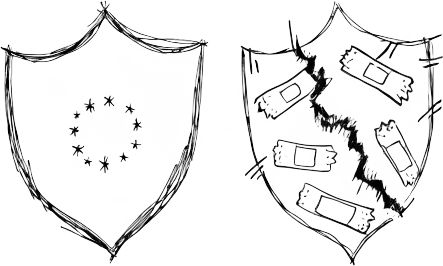
GDPR-native means the product was architected around European data protection law from day one, not adapted to it after the fact. Five things separate the two approaches.
1. Where the data lives. GDPR-native: EU-only data centers, no transatlantic transfers, no Schrems II exposure. GDPR-patched: US-hosted by default, EU region available as an enterprise upgrade, sub-processors in the US.
2. What happens to your data. GDPR-native: your data never trains the vendor's models. GDPR-patched: training opt-outs exist but are buried in DPAs, sometimes default-on, and often exclude “aggregated” or “anonymized” use.
3. Consent and recording disclosure. GDPR-native: consent flows are built in, configurable per jurisdiction, and meet works council requirements out of the box. GDPR-patched: recording is on by default, disclosure is the customer's problem, and consent UX is bolted on.
4. Retention controls. GDPR-native: granular retention by recording, configurable per company, with selective preservation (bookmark to retain, delete-by-default for everything else). GDPR-patched: retention is a global setting, often locked behind enterprise plans.
5. Works council and DPO compatibility. GDPR-native: the tool was designed knowing that German Betriebsräte and DPOs will scrutinize it. GDPR-patched: the vendor sends a 40-page DPA and hopes for the best.
This is wedge 5 in our positioning: EU-grade trust vs. GDPR-patched global tools. Not a marketing claim. An architectural one.
Why this matters more in 2026 than it did in 2024
Three things changed.
The EU AI Act took effect. General-purpose AI obligations applied from August 2025, and high-risk AI system rules apply from August 2026. Any AI that processes sales conversations sits inside scope. European buyers are now asking vendors directly how they comply.
Schrems II enforcement got teeth. EU regulators moved from warning letters to fines. Data transferred to the US under Standard Contractual Clauses is no longer a defensible default. It's a documented risk that DPOs have to sign off on.
Works councils caught up to AI. In Germany, France, and the Netherlands, works councils now treat AI recording tools as co-determination subjects. Approval cycles for US-hosted conversation intelligence platforms stretched from weeks to months. One customer told us a US competitor's procurement was blocked for 5 months waiting for Betriebsrat approval.
The compliance overhead is real. Industry data shows ongoing GDPR compliance costs of €500–€2,500 per month for software companies, with violations costing up to €20 million or 4% of global revenue. A GDPR-patched tool transfers that risk to you.
What our customers are saying
One pattern dominates our recent customer conversations. A senior sales leader at a B2B sales consultancy told us this week:
“Clari is American, and a lot of people have a problem with that. You're German and GDPR, and that's ultra important for many.”
This is not an outlier. In our Week 25 customer intelligence review, “DSGVO compliance” surfaced 11 times as a deciding factor — unprompted, early in the conversation, as the reason a US competitor was eliminated before pricing was discussed.
The pattern: European buyers will evaluate US tools, but the moment a DPO or works council enters the loop, the GDPR-patched tool loses on procedure even if it wins on features.
How Demodesk is GDPR-native
The four AI agents — AI Assistant, AI Coach, AI Analyst, AI CRM Concierge — all run on the same EU infrastructure with the same compliance defaults. There is no “EU edition” because there is no other edition.
Hosting. Microsoft Azure, Frankfurt region. No US sub-processors for sales conversation data. No transatlantic transfers for processing.
Training. Your customer conversations never train Demodesk's models. The product was fine-tuned on 10M+ real sales conversations, but that fine-tuning happened on consented research data, not customer production data. New customer data does not enter the training set.
Consent and disclosure. When AI Assistant joins a meeting, it announces itself. Recording disclosure is built into the meeting flow and configurable to match jurisdiction-specific consent requirements. Works council representatives can configure who can be recorded and under what conditions.
Retention. Configurable per company: 12 hours, 15 days, 30 days, 60 days, 90 days, 150 days, or 1 year. Bookmarked recordings are excluded from auto-deletion, which enables a “delete by default, selectively retain for coaching” model. German DPOs and Betriebsräte ask for exactly this — and it's available without an enterprise upgrade.
Custom vocabulary. Up to 120 characters of brand and technical terms passed to the transcription engine. Accurate transcription of regulated terms (product names, drug names, financial instruments) reduces the risk of misclassification.
Certifications. ISO 27001:2022 certified, GDPR-compliant by architecture, EU AI Act-aligned. Documentation is on security.demodesk.com — DPOs can self-serve before the first sales call.
How this compares to the alternatives
Modjo is the closest European peer on compliance posture. The functional differences — pricing, execution vs. analytics, agent builder, free trial — are covered in our Demodesk vs. Modjo comparison.
What changes in your procurement process
A GDPR-native tool removes three blockers that GDPR-patched tools create.
DPO review. With Demodesk, the DPO conversation is 30 minutes: review the DPA, confirm Frankfurt hosting, confirm no training on customer data, done. With US-hosted competitors, the DPO has to document Schrems II risk, justify the transfer mechanism, and often escalate to legal.
Works council approval. German Betriebsräte have a co-determination right over AI tools that monitor employees. Demodesk's consent flow and retention controls make approval straightforward. With US tools, the Betriebsrat often demands custom configuration that the vendor can't or won't provide.
Sales rep adoption. Reps don't read DPAs, but they notice when legal blocks the tool, when consent disclosure feels wrong, or when they have to explain to a French prospect why their conversation is being processed in Virginia. GDPR-native removes those friction points.
The compound effect: a procurement cycle that runs 6–8 weeks for Demodesk often runs 4–6 months for a GDPR-patched competitor in a regulated European environment.
What “GDPR-native” does not mean
It does not mean Demodesk is only for European customers. It means European customers can buy without compliance friction. Customers in the US, UK, and APAC use Demodesk on the same EU infrastructure with the same defaults.
It does not mean you can't record. It means you record with consent, with retention controls, and with works council compatibility — the same way you'd design it yourself.
It does not mean compliance is free. It means the compliance work is done at the architecture level, not pushed to the customer as a configuration burden.