The Sales-AI Stack in 2026: Where Demodesk Fits (and Where It Replaces What You Already Use)
A 6-level mental model for the sales-AI stack: foundation models, agent platforms, meeting capture, conversation intelligence, execution agents, CRM. Where Demodesk fits, where it replaces, and why this level exists.

The sales-AI space looks crowded because buyers can't tell which tools do the same job and which sit on top of each other. The reality: six levels, each with a different role. Foundation models supply intelligence. Horizontal agent platforms let teams build their own automations. Notetakers capture the call. Conversation-intelligence platforms score it. CRMs store the record. Demodesk lives in the level most stacks are missing — the execution level that turns signal into action.
We use Level 1, sit next to Level 2 as a vertical alternative, replace Levels 3 and 4, and feed clean data into Level 6. The rest of this post is the long version of that sentence.
The six-level sales-AI stack
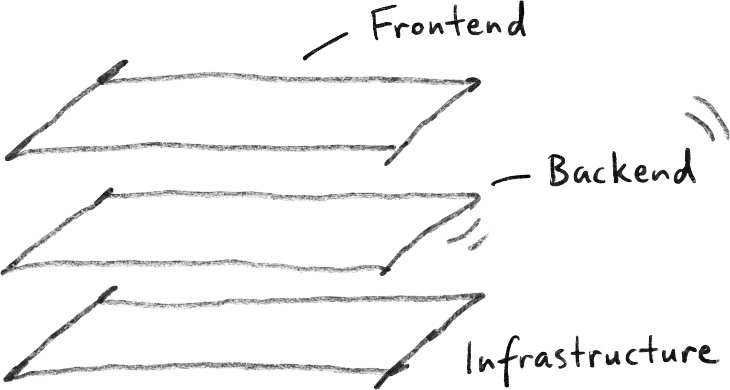
The diagram below is the centerpiece — the version we send to prospects and the one buyers screenshot into their internal decks. Read it top-down. Level 6 is the surface buyers see; Level 1 is the substrate they don't.
| Level | Players | Demodesk's relationship |
|---|---|---|
| Level 6 · CRM / system of recordSalesforce, HubSpot, Pipedrive, Attio, ZeroStores deal, contact, account data. | Salesforce, HubSpot, Pipedrive, Attio, Zero | IntegratesCRMs are records, not agents. Demodesk pushes clean data in with 99% accuracy. |
| Level 5 · Execution / vertical agentsDemodesk (emerging category)Acts on call signal: CRM updates, follow-ups, coaching, deal flags. | Demodesk (emerging category) | Is this levelVertical AI sales platform. Built on sales methodology, not retrofitted from analysis. |
| Level 4 · Conversation intelligenceGong, Modjo, Kickscale, ChorusScores calls, surfaces risks, builds dashboards. | Gong, Modjo, Kickscale, Chorus | ReplacesCI platforms analyze. Demodesk executes. Same data, different DNA. |
| Level 3 · Meeting capture / notetakerFireflies, Microsoft Copilot, tl;dv, OtterRecords and transcribes meetings. | Fireflies, Microsoft Copilot, tl;dv, Otter | ReplacesCapture is table stakes. The value is what happens after the call ends — and notetakers stop there. |
| Level 2 · Agent platforms & workflow buildersn8n, Make, OpenAI Agent Builder, Claude Agent SDK / Claude Cowork, AWS Bedrock Agents, LangChainHorizontal toolkits for composing agents and workflows on top of foundation models. | n8n, Make, OpenAI Agent Builder, Claude Agent SDK / Claude Cowork, AWS Bedrock Agents, LangChain | Sits next toBuild-it-yourself toolkits. Demodesk is the built-for-sales product. Different buyer, different scope. Some teams use both. |
| Level 1 · Foundation modelsOpenAI, Anthropic, Google, MistralGeneral-purpose LLM intelligence. | OpenAI, Anthropic, Google, Mistral | Builds on topGeneric models lack sales-specific structure, methodology, and integrations. We use them as a substrate. |
Level 1 · Foundation models
OpenAI, Anthropic, Google, Mistral. Foundation models are the substrate. Every AI-native product today, including Demodesk, runs on them. We don't pick one — we route to the right model for the task: high-accuracy summary, transcription, scorecard reasoning, CRM-field extraction.
Why a sales team can't just call OpenAI directly:
- LLMs don't know what MEDDIC, BANT, or SPICED are out of the box.
- LLMs don't push to Salesforce, can't read your HubSpot custom fields, and won't run an approval gate before updating a deal.
- LLMs don't enforce data residency, ISO 27001, or works-council requirements.
- “Wire it up yourself” turns into a multi-quarter engineering project that competes with revenue work.
General intelligence plus sales-specific structure plus sales-specific integrations equals a product the rep can use Monday morning. That's the vertical-AI thesis, and it's why Level 1 alone never gets there.
Buyer question this answers
“We have an internal AI team. Why wouldn't we just build this on top of GPT or Claude?”
Level 2 · Agent platforms and workflow builders
n8n, Make, OpenAI Agent Builder, Anthropic's Claude Agent SDK and Claude Cowork, AWS Bedrock Agents, LangChain. This level didn't exist as a distinct category two years ago. In 2025-2026 it exploded: every major foundation-model provider shipped an agent platform, and no-code workflow tools added AI nodes.
Two sub-flavors inside this level:
- Workflow automation with AI nodes. n8n (low-code, self-hostable), Make (no-code), Zapier (no-code, with AI Central). Originally built for general business automation. AI nodes added more recently.
- Native agent builders from model providers. OpenAI Agent Builder, Claude Agent SDK and Claude Cowork, AWS Bedrock Agents, Google Vertex AI Agent Builder. Built specifically for composing agents from frontier models.
These platforms provide a horizontal toolkit. You bring the use case, the integrations, the prompts, the methodology, and the quality control. They give you the runtime. They do not ship out-of-the-box sales methodology, MEDDIC scorecards, 99% CRM accuracy guarantees, call-recording infrastructure, a data-residency story for European enterprise, or vertical sales-specific integrations with Salesloft, Outreach, Aircall.
Two patterns we see at customers
Pattern A. Buy Demodesk, build the long tail in n8n or Make. Demodesk covers the sales-AI execution level. n8n and Make handle the one-off integrations that don't justify a product purchase. Healthy stack.
Pattern B. Try to build the whole execution level on n8n + OpenAI Agent Builder. Initial prototypes look promising. Six months later, the team realises they've reinvented MEDDIC scoring, transcript chunking, scorecard versioning, and a CRM-update approval gate — badly. They buy Demodesk for the vertical surface and keep the agent platform for the long tail.
Agent platforms are getting better fast. That makes them more attractive for build-your-own attempts — and it raises the value of vertical products that ship a complete domain solution. The gap between “general agent platform” and “sales-vertical product” lives in the domain-specific level: methodology, integrations, compliance.
Buyer question this answers
“Could we build Demodesk's capabilities ourselves with n8n + OpenAI Agent Builder, or with Claude Agent SDK?”
Short answer: yes, for a small slice. No, for the full thing — unless you want to staff a six-to-eight person team to maintain it. Use Demodesk for the sales-execution level; use the agent platforms for the long tail.
Level 3 · Meeting capture and notetakers
Fireflies, Microsoft Copilot, tl;dv, Otter. Notetakers are documentation tools. Demodesk includes capture as a sub-function of execution, not as the product. The notetaker hand-off problem is real: capture happens here, analysis happens there, action happens nowhere. The rep is still the integrator.
What notetakers can't do, and aren't built to do:
- Push structured data into CRM custom fields with rep approval.
- Run coaching scorecards against a sales methodology.
- Flag deal risk based on the conversation.
- Generate the follow-up content and queue it.
- Train a scorecard on a thousand of your team's recordings.
For teams with a strong notetaker investment, Demodesk's AI Assistant slots in as a like-for-like upgrade. For Microsoft Copilot specifically: Copilot Meeting is a horizontal productivity tool. Demodesk is a sales-vertical tool. Different category.
Buyer question this answers
“We already use Fireflies, Otter, or Copilot. Why add Demodesk on top?”
Related: Demodesk vs Fireflies · Demodesk vs Microsoft Copilot for Sales.
Level 4 · Conversation intelligence
Gong, Modjo, Kickscale, Chorus. Conversation-intelligence platforms were built for an earlier era of sales-AI: the analyze-and-report era. Their DNA is dashboards. Demodesk's DNA is execution. Same data, different output.
Where a CI tool says “here's the deal risk on this opportunity,” Demodesk says “here's the deal risk, here's the CRM update, here's the draft follow-up, here's the coaching note for the rep.” Acting on the signal is the product.
Why CI platforms struggle to evolve into execution:
- Their valuation depends on analysis being the value level.
- Adding execution puts them in direct competition with CRMs, which are their integration partners.
- Retrofitting an analytics platform into an agent platform is a re-architecture, not a feature release.
Regional notes: Gong is US-centric and enterprise-default; Modjo is strong in France and EU coaching-led teams; Kickscale serves DACH SMB and optimises for speed of insight; Chorus lives inside the ZoomInfo bundle.
Buyer question this answers
“We have Gong. Why would we replace it?”
Related: Demodesk vs Gong · Demodesk vs Chorus.
Level 5 · Execution and vertical agents
This is the level the post argues exists, has a right to exist, and is the one Demodesk is building. The reason teams buy notetakers, CI, and CRMs is so the rep can act on what happened. The execution level collapses that into one purchase.
Demodesk's execution level is four AI agents plus AI Crew:
- AI Assistant. Recording, transcription, summaries, follow-ups, and CRM syncing.
- AI Coach. Call scoring, custom scorecards, and deal risk detection.
- AI Analyst. Pipeline insights, GTM validation, and product-feedback extraction.
- AI CRM Concierge. Autonomous CRM updates with human-in-the-loop approval.
- AI Crew. Custom autonomous agents users build for their own workflows.
Why this category is emerging, not dominant, today:
- Two years ago, foundation models couldn't reliably push structured updates into CRMs. Now they can.
- Two years ago, sales teams weren't ready to give an AI write access to Salesforce. Now they are — with approval gates.
- The market is catching up to a capability that became feasible in 2024-2025.
Why a vertical execution level wins against horizontal agent platforms:
- Methodology is product. Demodesk ships MEDDIC, BANT, SPICED, and custom scorecards out of the box. Horizontal platforms require you to build and maintain these.
- Sales-specific integrations. Salesforce custom objects, HubSpot custom properties, Pipedrive workflow triggers, Aircall, Outreach, Salesloft. Horizontal platforms hand you the toolkit; we ship the integrations.
- Compliance is solved. 98 languages, GDPR-compliant, ISO 27001, EU-only data option. Horizontal platforms leave compliance to you.
Buyer question this answers
“What category is Demodesk in? It's not a notetaker, not a Gong, not a CRM. What is it?”
Level 6 · CRM and system of record
Salesforce, HubSpot, Pipedrive, Attio, Zero. CRMs are the system of record. Demodesk is the system of action. Different jobs.
The “won't Salesforce or HubSpot ship this?” question. They are shipping AI features (Einstein, Breeze). Those features are bolt-ons to a records platform, not a vertical AI sales product. Salesforce's full agent roadmap is multi-year — Demodesk ships today. And incentives are aligned, not competitive: CRMs want to keep data in the CRM; a vertical execution level wants to put clean data IN the CRM.
The new CRMs — Attio, Zero, Folk — are more API-first, more agent-friendly, more flexible. Demodesk integrates as cleanly there as it does with Salesforce and HubSpot. These are allies, not competitors. They make Level 6 better for agents like ours.
On the 99% CRM-accuracy claim: it's sourced from customer outcomes. See a German sustainability company on HubSpot, a German marketplace company on SugarCRM, a German HR tech company on HubSpot, and a German energy company on Pipedrive.
Buyer question this answers
“Salesforce or HubSpot will ship this within a year. Why not wait?”
Why this level needs to exist
The strategic argument, in three sub-claims.
1. The current sales-AI stack is incomplete. Teams buy notetakers, conversation intelligence, and CRMs — and the rep is still the integrator. The execution level is missing.
2. No adjacent category can ship the execution level well. Foundation-model providers won't — too horizontal, no sales-specific structure. Horizontal agent platforms won't ship the finished product — they're toolkits, not products. Notetakers won't — doc-tool DNA, retrofit cost prohibitive. CI platforms can't — analysis DNA, retrofit is a re-architecture, valuations resist the shift. CRMs won't ship it natively — records-platform DNA, multi-year roadmap, incentive misalignment.
3. Vertical AI is the right architecture for this level. General intelligence (Level 1) plus sales-specific methodology, integrations, and compliance equals a product the rep can use Monday morning.
“Demodesk's right to exist is the right to exist of an entire category. The category is vertical AI for sales execution. We're the team building it.”
How to evaluate the stack you already have
Walk the levels top-down. One question per level.
- Level 6. Do you have a system of record? Yes, almost always. Keep it.
- Level 5. Where does call signal turn into CRM updates, follow-ups, coaching, and deal flags? If the answer is “the rep types it in,” that's the gap Demodesk fills.
- Level 4. Do you have a CI platform? Audit how much of its output reps act on. If under 30%, consolidate into Level 5.
- Level 3. Do you have a notetaker? AI Assistant replaces it. Decide whether to consolidate or pay for both.
- Level 1. Don't try to build the rest yourself on top. Buy the vertical level.
| Your situation today | Recommended move |
|---|---|
| No sales-AI at all | Start at Level 5 (Demodesk). Capture, CI, and execution come together. |
| Have a notetaker, nothing else | Replace the notetaker with Demodesk. Gain Level 4 and Level 5 capabilities. |
| Have Gong, Modjo, or Kickscale — no notetaker per se | Replace CI with Demodesk. Keep the recordings, gain execution. |
| Have a notetaker AND a CI platform | Consolidate both into Demodesk. Two line items become one. |
| Have CRM + native CRM AI (Einstein, Breeze) | Add Demodesk for Levels 3-5. CRM AI is not built for this. |
| All-in on Salesforce Agentforce | Run Demodesk for sales-execution use cases. Let Agentforce handle horizontal, IT-led automation. |
| Have n8n / Make / Zapier with AI nodes running custom workflows | Keep them for the long tail of one-off integrations. Add Demodesk for the sales-execution level. |
| Built sales-AI in-house on OpenAI Agent Builder or Claude Agent SDK | Audit maintenance load + scope coverage. If the team is reinventing scorecards and CRM-approval gates, switch to Demodesk for that level. |
The frequently asked questions
Why isn't Demodesk just a feature of Salesforce or HubSpot?
Records-platform DNA vs. execution-platform DNA. Salesforce's and HubSpot's native AI roadmaps are multi-year; Demodesk ships today. Their incentive is to keep data in the CRM — ours is to put clean data into it. Customers like a German sustainability company on HubSpot and a German marketplace company on SugarCRM run both stacks side by side, not as substitutes.
How is Demodesk different from Gong?
Same call data, different output. Gong analyses; Demodesk executes. Gong is a great product — it's just optimised for a different job. The full breakdown lives in Demodesk vs Gong.
We're a 250-person company on Microsoft Copilot. Why a separate tool?
Copilot is a horizontal productivity level. Sales-AI is a vertical execution level. Different categories, different DNA, different integrations. The detail sits in Demodesk vs Microsoft Copilot for Sales.
Couldn't our AI team build this with GPT or Claude?
Technically yes. Practically, the multi-quarter cost of building, the maintenance cost of integrations, and the opportunity cost of pulling engineering off revenue work all favour buy over build. The vertical-AI economics are the same as every other category that started horizontal and ended up vertical.
Could we just build this on n8n, Make, OpenAI Agent Builder, or Claude Agent SDK?
Same answer as the GPT or Claude question, with one nuance. These platforms are great for the long tail of one-off automations. A full sales-execution level — capture plus coaching plus scorecards plus CRM hygiene plus multi-channel follow-up plus deal flags plus compliance — is a 12-to-24-month build the buyer would then maintain forever. Teams that try Pattern B usually end up buying Demodesk for the vertical surface and keeping the agent platform for everything outside the sales-execution scope.
What about the new CRMs like Attio or Zero?
Different levels. Attio and Zero are Level 6 (records). Demodesk is Level 5 (execution). They're integration partners, not competitors — well-architected allies for the agent-friendly stack.
How does Demodesk fit if we already have a conversation-intelligence platform?
Audit utilisation first. If reps act on under 30% of CI output, the analysis-only investment is underperforming. Demodesk consolidates capture, intelligence, and execution into one purchase.
What about emerging European competitors like Modjo and Kickscale?
Both are strong Level 4 players for their segments. Demodesk operates at Level 5 and includes Levels 3 and 4 capabilities. The category difference is the same as Gong: analyse vs. act.
Is this category big enough to bet on?
Every level below Level 5 exists because someone needed it. The execution level is where each adjacent category has been pointing the buyer for five years. Vertical AI for sales execution is the market that closes the loop.